
CCC's history of supporting startups and industries and its vision for the future through "TIB SHOP"
In June 2025, CCC launched TIB SHOP with the Tokyo Metropolitan Government at Tokyo Innovation Base, enabling consumer and food startups to open pop-up stores for test marketing and product promotion in a global startup hub. (Updated July 11, 2025)
At CCC, we will explain the background to our efforts to support startups, the thoughts behind "TIB SHOP," and our vision for the future.
Social Design Business
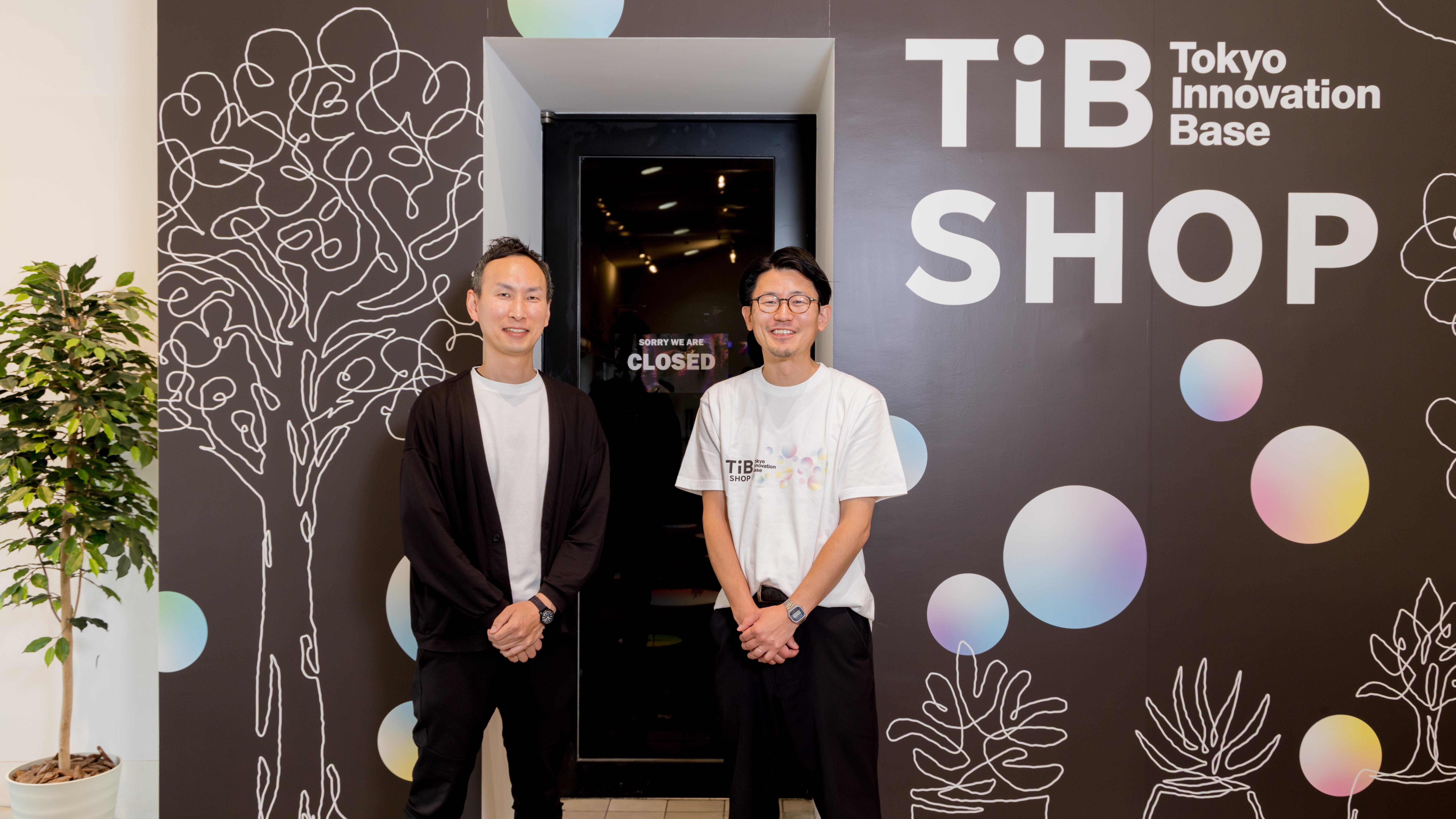
We interviewed Keiichi Sakurazawa and Junya Kamata from the Incubation Business Support Promotion Department, who are leading the project.
■
Started operation of "TIB SHOP" at "Tokyo Innovation Base" operated by the Tokyo Metropolitan Government
The history and origins of startup support
──So far, we have been running the Startup Cafe, a startup support center, and the Tokyo Metropolitan Small and Medium Enterprise Support Center, a public interest incorporated foundation. Startup Hub Tokyo TAMA","Open Innovation Field Tama Kokubunji and HachiojiWe have been working with local communities, universities, and government agencies to provide a variety of startup support programs, such as the "Startup Support Program."First of all, please tell us how you got involved in supporting startups and industries.
Sakurazawa: The Fukuoka City Startup Cafe, which CCC established in 2014 under a commission from Fukuoka City as a base for creating a startup city, was the starting point of our startup support. Fukuoka City has been selected as a National Strategic Special Zone "Global Startup and Job Creation Special Zone" and is focusing on supporting startups. With TSUTAYA's flagship store located in the center of Fukuoka City, and as part of our roots in the Kyushu/Fukuoka region through our franchise business, we have been able to make connections with local collaborators, which has led us to play a part in this effort.
──Please tell us about any lessons or realizations you have gained from attending the startup support centers so far.
Sakurazawa: Starting with Fukuoka, the startup and industry support bases we operated expanded to Osaka and Tokyo, and our organization became dispersed. In 2022, we integrated these into one organization and established a system to work across the board as CCC.
We collaborate with local governments, starting with the entrustment of library management, which is a public infrastructure. Social Design Business We launched this initiative in 2012, but as we strive to provide new value in the form of support for new start-ups and industries, we felt that it was necessary to leverage the synergies of our group to provide more diverse support, as each region has different targets and characteristics.
Specifically, the needs of people looking to start a business, the industrial structure, and government support policies vary greatly from region to region. For example, while Fukuoka focuses on supporting young entrepreneurs and IT startups, Osaka is looking for academic entrepreneurial support that leverages collaboration with universities, and Tokyo is looking for support that emphasizes product test marketing and expanding sales channels. In order to provide flexible support tailored to the unique characteristics of each region, we have evolved and faced the challenges faced in each region.

In particular, the presence of local partners who can fill in the gaps in expertise and experience that CCC alone lacks is invaluable. We felt that it was necessary to develop a diverse approach by utilizing the network we have built in support of entrepreneurship and the knowledge we have gained as a group in the process of evolving and growing in each region and field.
--Please tell us about CCC's unique approach to startup support.
Sakurazawa: The Startup Cafe in Fukuoka City, which began in 2014, has supported people aiming to start their own businesses in generating ideas from scratch, but TIB SHOP is looking for support to accelerate the growth of already developed products from 1 to 100. At Startup Hub Tokyo TAMA, where I first got involved in supporting startups, we were able to see the potential for test marketing and external collaboration through supporting manufacturing.
Supporting the growth of fledgling startups is similar to the corporate growth support that CCC has cultivated through its franchise business and DB marketing. As a public facility operator, we have a role to play in supporting the growth of startups, but we would also like to take on the challenge of providing more extensive support.
"We create what doesn't exist, turn it into something good, and share it with the world" - that is our motto: "We are a company that creates cultural infrastructure."This is also our mission, as we have set the goal of ``creating a society where people can live happily and with peace of mind.''

Philosophy behind supporting startups
──What are the values that you have held dear up until now, and what do you keep in mind when interacting with startups?
Sakurazawa: What we have consistently valued is a "startup first" attitude, which puts those who take on challenges first.
In other public services that we are contracted to operate, such as libraries, we have designed support from the perspective of the user, rather than the provider.
Another major strength of ours is our willingness to work hard on-site and to support each individual. Rather than simply providing consulting services, we are on-site and provide support while interacting directly with entrepreneurs and business owners, which helps build relationships of trust.
As a result, more and more people are empathizing with our attitude and vision and feeling that "I'd like to work with these people."These people have volunteered to help us in a variety of areas, including running events, promoting projects, and networking with other entrepreneurs.
The significance of entering the "TIB SHOP" business and the current state of CCC's startup support
--What motivated you to take on the challenge of the "TIB SHOP" business? What was the concept behind it? What are some of the innovations that make it different from previous startup support centers?

Kamata: We have the retail distribution network, the product sales know-how we have cultivated at Futako Tamagawa Tsutaya Electrics, and the crowdfunding platform "GREEN FUNDINGWe thought that by leveraging our collaboration with ", we could help startups bring their products to the world. In June, 13 startups will be exhibiting products at the "TIB SHOP," and the company will continue to recruit applicants for exhibits every month.
──How do you want to support the growth of startups through "TIB SHOP"?
Sakurazawa: We don't lump all startups together, but rather support each company individually. I hope that the company will grow and spread its wings around the world, but at the same time, I also want to be there to provide emotional support when things don't go well.
Kamata: Taking on a challenge is a wonderful thing in itself, and rather than feeling like I'm supporting them, I feel like I'm being allowed to support them. Nothing would make me happier than if "TIB SHOP" could be the catalyst for a leap forward.

A vision for the future of startup support unique to CCC
──Please tell us about the type of startup and industry support CCC aims to provide in the future, and what you would like to focus on in collaboration with local communities, universities, and government agencies to support startups.
Sakurazawa: The Open Innovation Field Tama Kokubunji and Hachioji Halls, a co-creation platform for local small and medium-sized enterprises, provides a place for small and medium-sized enterprises to increase their competitiveness. We would like to not only highlight startups, but also small and medium-sized enterprises that support the local economy and support their growth.
We want to be a planning company that nurtures the seeds of new industries, through new co-creation through the combination of startups and small and medium-sized enterprises, and through the fusion of passion through collaboration with government and universities.
We also believe there is a large regional disparity in entrepreneurial opportunities between urban and rural areas, so bridging that gap is also an important mission. We believe that there are things we can do precisely because we were raised in the community.
Kamata: At "TIB SHOP," we provide support while visualizing results such as expanding exhibitors' sales channels and the number of matches. By expanding our own network of collaborators and providing it to startups, we hope to help create more talent and passion and spread it to the world.