
Using big data to pave the way for a sustainable food future
As sustainability gains urgency, we address environmental and local economic issues. Since launching the T Card Everyone's Social Project in 2016, we use big data to solve local challenges and shape a better regional future.
T-CARD Everyone's Social Project
Since its launch in 2003, T-POINT* has provided value rooted in the local community. Toward a sustainable future, we have been challenging ourselves to contribute to solving local issues through the use of big data, starting with the "T-CARD Everyone's Social Project" in 2016.
*On April 22, 2024, CCC Group's "T-POINT" and SMBC Group's "V POINT" will be merged and the current name will be "V POINT."

Takita: "T-POINT, the shared points service that began in 2003, has continued to grow together with local customers and partner companies, while being deeply connected to people's lives. In 2016, when the T-CARD became the point card held by more than half of the Japanese people, we began to think, "From now on, instead of just using our assets for business purposes, can we use them to solve local issues and improve the future of consumers?" This idea gave rise to the idea, and we started the "T-CARD Everyone's Social Project," an initiative aimed at solving social issues and creating social value. "
The "T-CARD Everyone's Social Project" utilizes the knowledge and big data of T members, who are consumers, in a safe manner in a strictly security-controlled environment to tackle local issues.
Takita: "In order to create value rooted in the local community, which has traditionally been important to T-POINT, we want to undertake initiatives that will lead to resolving local issues and revitalizing the community, and so we have set the theme of the 'T-CARD Everyone's Social Project' as 'sustainability.'
Furthermore, five years before the project began, we had been providing support to the disaster-stricken areas since the Great East Japan Earthquake in 2011, and as we became more involved with the people living in Tohoku, concrete activities began to emerge. As part of our support activities, we built a children's center and a playground after a children's center was washed away by the tsunami, and this initiative had two effects. First, it provides a place where children can feel safe, and second, it allows the adults who are their parents to go to work without worry.
At this time, when residents expressed their gratitude for being able to go to work as they had before the earthquake, I realized that unless the economy and industry were running, local issues could not be fundamentally resolved and sustainability could not be achieved. "
Supporting Sanriku's fishing industry through the development of processed seafood products: "Sanriku Oyster Project"
Through his support activities in the disaster-stricken areas, he met many different people and deepened his friendships with people involved in primary industries. One day, he heard from a local fisherman about the challenges facing the fishing industry in Sanriku, one of the world's three largest fishing grounds. They lost boats and equipment in the tsunami, fishermen died, it became difficult to harvest marine resources, and they were worried that fishing would no longer be viable for the future. The concrete activity that we carried out was the "Sanriku Oyster Project."
Takita: "When we asked the fishermen about the fish species that are posing challenges to the fishing industry in Sanriku, oysters came up. Sanriku oysters are famous for their high quality and delicious when eaten raw, but the period during which they can be sold raw is limited, and sales fluctuate depending on the season, which is an issue. If we can sell oysters as processed products, we can deliver Sanriku oysters to consumers across the country all year round, and let them know the appeal of Sanriku oysters. We believe that this cycle will increase the economic viability of Sanriku oysters and become a sustainable model for the fishing industry. "
The project members were made up of local fishermen, people involved in distribution, and volunteer T members who had been identified from the database based on their tendency to be particular about cooking and food, and their preference for seafood, and they worked on product development. In developing the product, we discussed not only using large oysters from the best season, but also making effective use of oysters that are high quality but are discarded during the production process because their shape and size do not meet the standards.
Takita: "We formed a project team that brought together producers, distributors, and consumers, and carried out everything from data analysis to proposing prototypes in one go. After numerous discussions, two products were born. One of them is fried whole oysters, which allow you to enjoy the delicious flavor of large oysters in early spring, which is the best season but not very well known. These fried oysters are packed with appeal, with a crispy exterior and a juicy interior that gives off the flavor of fresh oysters. They come in two flavors: curry and garlic, and parsley and cheese. The other dish is pickled oysters and basil in oil, made using scraps of oysters left over from shucking, mixed with basil in oil. "

Takita: "During this initiative, fishermen told us, 'Because of the nature of our work, we spend a lot of time on the sea, and we don't often have the opportunity to interact directly with consumers. This time, I was able to hear directly from consumers about their needs and thoughts about oysters, which gave me some realizations. "We received comments such as, "This is great!"On the other hand, member T, who is a consumer, said, "I participated because I wanted to help the people in the disaster-stricken areas, but I was also very pleased to be able to meet face-to-face with people involved in the fishing industry and develop products, and that our opinions were reflected in the creation of the products.""We have been told, "I worked on fishing, one of the primary industries, hoping that it would lead to economic revitalization, and this experience made me even more determined to tackle local issues by focusing on fishing. "
"Goto Fish Project" Challenges solving issues facing fisheries on remote islands by utilizing unused fish
The Goto Islands, located west of Nagasaki Prefecture, consist of 150 islands of various sizes. While the island has abundant marine resources, it has struggled with the problem of limiting the types of fish it can ship due to the cost of transporting them off the island and the difficulty of keeping them fresh.
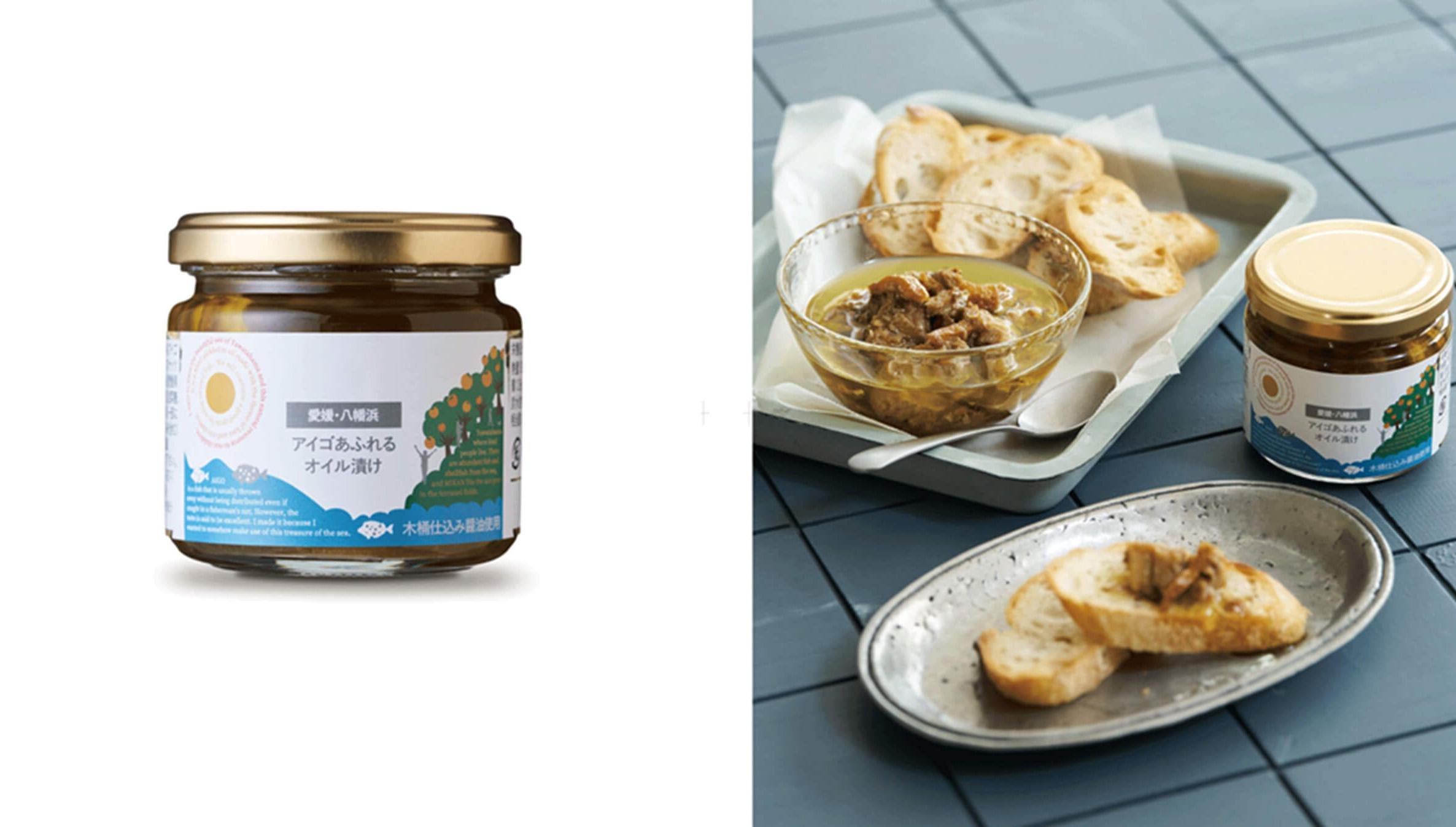
Takita: "I have been paying attention to the issues facing fisheries on remote islands for some time. First, in order to identify more specific issues, I stayed in the area for about a week and spoke with fishermen, seafood processors, market staff, government officials, and other relevant parties. One common issue that emerged was "unutilized fish.""Unused fish" are said to be fish that have no value because they are not a major species and there is no way to eat them in a tasty way. Even if they are caught in nets, they cannot be shipped and are often discarded in the ocean. However, unused fish are also valuable marine resources, and I thought that if they could be utilized, we could make some small changes to the fishing situation in Goto. "
Typical unused fish in Goto include rabbitfish, parrotfish, red snapper, and barracuda. Because it grows by eating seaweed, it has a strong smell of the seashore, which is an issue that consumers dislike. Additionally, when rocky shore denudation occurs, a phenomenon in which seaweed declines, marine life important to the fishing industry and ecosystems disappears and water quality deteriorates. Given this background, we developed products with the theme of utilizing unused fish.

Takita: "Because it is a remote island, there are already issues with transportation costs, and if the production process becomes complicated, it becomes even more expensive, and there is a regional tendency that distribution to urban areas is not possible. Therefore, project members and manufacturer Hamaguchi Suisan developed 'Goto Fish Ham' by trial and error to come up with a recipe that makes use of the underutilized parrotfish while keeping the process as simple as possible. "

Takita: "In order to protect the fish and clean oceans of Goto, I thought that assigning a certain value to unused fish caught in nets and using them might lead to sustainable fishing, so I started working on developing products using unused fish from Goto. We felt that this could potentially benefit consumers while making use of the bounty of the sea, leading to sustainable fishing and an ethical food culture in Japan. "
Co-creation platform "V Everyone's Ethical Food Lab"
Efforts to solve social issues and promote community coexistence continue to expand.
Starting in March 2021, we have been working on "V Everyone's Ethical Food Lab," a co-creation platform that utilizes the assets of the CCC Group to think about and take action on issues that would be difficult for a single region or company to solve alone, through dialogue with stakeholders with a wide range of knowledge across industries, primarily consumers, to address the global issue of "sustainable food."
As part of its activities, the "V Minna no Ethical Food Lab" utilizes the theme of "unused fish," discovered through the "Goto Fish Project," and is continually developing products with added value. Through this initiative, we are increasing the points of contact between "unused fish" and consumers, spreading empathy for the idea of ethical food, and promoting activities that contribute to the Japanese diet.


Furthermore, we have created the "Ethical Food Standards" in response to the fact that until now there have been no standards for determining whether the products that consumers pick up at their everyday supermarkets are ethical. This will allow you to see which foods are ethical.

Takita: When creating the ethical food standards, we worked with 12 experts in fields such as food, ethics, and SDGs, as well as members of the Ethical Consumer Research Association, a British NGO well-known for its work on ethical consumption, to explore the scope of what could be applied in Japan while placing emphasis on global standards. Furthermore, in order to establish standards while ensuring fairness, transparency, and public interest, we have made public the entire dialogue process leading up to the creation of the standards as a transcript. Currently, this standard is serving as a reference example for companies working in this field, and we are receiving an increasing number of inquiries about it. I am pleased that the circle of ethical people is beginning to spread within Japan. "
CCC MK HOLDINGS will continue to work to solve social issues with the aim of realizing "sustainable food" in order to improve the future of the region.
Takita: "Our efforts are being carried out through a 'multi-stakeholder process' in which people from various walks of life, including consumers, local communities, businesses, and civic groups, come together to think and act together. At times, our interests may conflict and our opinions may differ, but we believe that what we can and should do is to respect each other's thoughts and values and find solutions for the future.
Our goal is to build the foundation for realizing sustainable food. By combining the data we have with food needs, we hope to work together to solve the challenges facing society and communities, and create a future that will connect to the next generation. We are pleased to be a part of this change, which will make ethical food more accessible to people and spread ethical food culture throughout society. "
*CCC MK HOLDINGS handles data appropriately in accordance with the protection of customer privacy and personal data. For more information, please visit our Privacy Center.